
Florida pool fence code requirements. What the 2026 code actually says.
Florida's pool barrier code is strict and actively enforced. Exact measurements, gate requirements, and what actually passes inspection in SWFL.
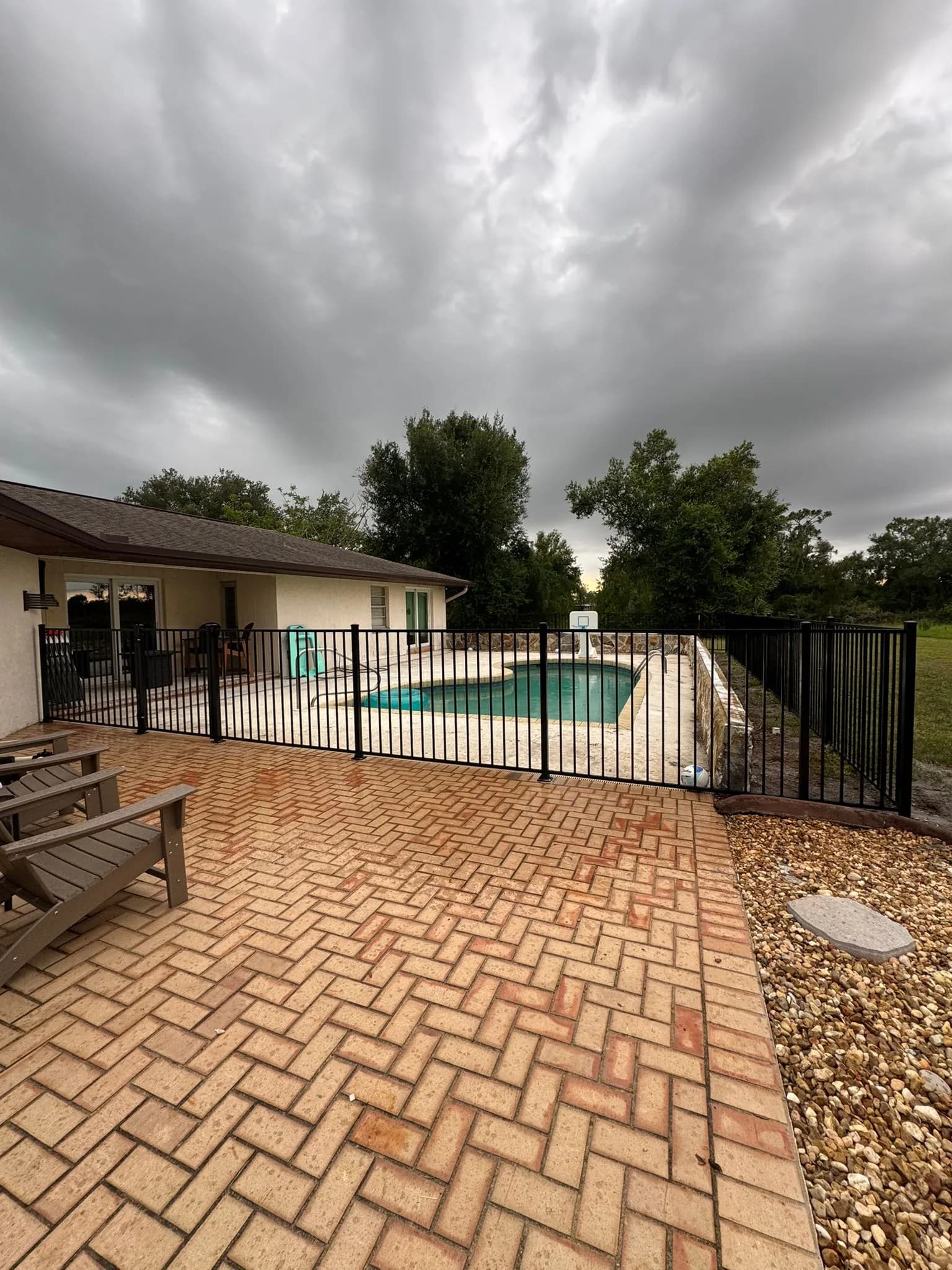
Florida's pool barrier code is one of the strictest in the country. The code exists because drownings are the leading cause of accidental death for young children in Florida, and most of those happen in home pools. The inspector's job is to fail your fence if it doesn't comply, and they take that job seriously.
We install pool fences that pass inspection the first time. Here's the actual code, translated into plain English.
The five rules, in order of what gets people
1. Height: 48 inches minimum, measured outside the pool area
Your pool barrier has to be at least 48 inches tall measured from the outside grade. If your yard slopes, the barrier has to be 48 inches tall at every point along its run. On a sloped lot, that often means a stepped fence.
Most SWFL pool fences are installed at 48 or 54 inches. Going taller is fine but not required.
2. No openings larger than 4 inches
This is the one that sinks a lot of DIY fences. Any opening in the barrier where a 4 inch sphere can pass through is a failure. That covers:
- Picket spacing in aluminum or wood
- The gap under the fence (must be less than 4 inches from ground to bottom rail)
- Gaps around posts
- The gate itself when closed
Aluminum picket fences are popular for pool barriers because the standard spacing is already compliant.
3. No climbable horizontal members within 45 inches of the ground
On the outside of the fence (the side facing away from the pool), there can't be horizontal rails a child could use as foot holds. Any horizontal rails must be at least 45 inches apart, or on the pool side of the fence, so a kid can't boost themselves over.
This is why most pool-rated aluminum fences put the horizontal rails on the inside or use a design with rails too far apart to climb.
4. Self-closing, self-latching gate that opens outward
The gate is where most inspections fail. The code requires:
- Self-closing. Let go, it closes on its own. No exceptions.
- Self-latching. When it closes, it latches on its own. You don't push the latch.
- Opens outward (away from the pool). Not inward.
- Latch at 54 inches or higher from the ground on the pool side, so a small child can't reach it.
Magnetic latches like MagnaLatch are the standard. Hydraulic closers (the kind you see on commercial doors) are what we use because regular spring closers wear out fast in Florida sun.
5. No direct access from the house to the pool area without a barrier
If the pool is behind a wall of your house and you can walk straight from the kitchen to the pool with no barrier in between, that door has to:
- Be alarmed (a specific type of door alarm approved by the code)
- Or open onto a pool-fence compliant enclosure
- Or have a pool-cover system that meets the code
Most people handle this with a screen cage or a separate barrier on the pool deck.
What the inspector actually checks
In SWFL, the pool fence inspector runs a checklist. In order:
- Measures the height at the lowest point
- Uses a 4 inch sphere to test every opening
- Walks the outside looking for climbable rails
- Opens and closes the gate multiple times (it has to self-close every time)
- Checks the latch height from the pool side
If any of those fail, the whole install fails. You fix it and re-inspect.
Materials that pass easily
The three materials we install most for pool barriers:
- Aluminum. Purpose-built for pool code. Look up any reputable Florida fence company and aluminum pool fence will be their top recommendation. Rust-free, the spacing is already compliant, hardware options are proven.
- Vinyl picket or semi-privacy. Fully compliant when spec'd correctly. Adds privacy that aluminum doesn't. Slightly higher cost.
- Glass-panel (less common). Possible but expensive and fragile in Florida weather.
What doesn't pass: chain link (openings too large), most decorative wood (climbable rails), picket fences with horizontal rails on the outside.
HOAs
Most SWFL HOAs have their own rules on top of the state code. Black aluminum is the safest bet for HOA approval across the region. White vinyl picket usually passes. Our team drafts a submission-ready HOA application package for you as part of every install, so you submit a complete application to the board the first time.
Cost
Aluminum pool fence installed in SWFL typically runs $40 to $60 per linear foot at 48 inch height. The self-closing self-latching pool gate is priced separately on every estimate because hardware grade varies. Use our fence planner to sketch your layout before the estimate.
Next step
If you're building a new pool or replacing a failing fence, we handle the install, the permit, the HOA submission package, and the inspection coordination. Book a free estimate or call (941) 275-9550.
We serve Southwest Florida from Bradenton down to Naples.